
Cataract Evaluation in Orland Park
Clear guidance for blurry vision, glare, halos, and night driving changes.
Cataracts are a common age-related change in the natural lens inside the eye. As the lens becomes cloudy, vision may become blurred, dim, hazy, or less vibrant. Cataracts often develop gradually, and one eye may be affected more than the other.
At Vision Source – Orland Park, our doctors evaluate cataracts as part of a comprehensive eye health exam. We assess how cataracts are affecting your vision, whether an updated glasses prescription may help, and when referral for cataract surgery may be appropriate.
What Are Cataracts?
The natural lens inside the eye is normally clear. Over time, changes in the lens can cause it to become cloudy. This cloudiness can scatter light as it enters the eye, leading to blurred vision, glare, halos around lights, and difficulty seeing clearly at night.
Cataracts are very common with age, but they can also be associated with diabetes, prior eye injury or inflammation, long-term steroid medication use, significant UV exposure, and family history.
Common Cataract Symptoms
Cataracts may cause cloudy or blurry vision, increased glare, halos around lights, faded colors, reduced contrast, frequent glasses prescription changes, or difficulty driving at night.
If your vision seems dimmer, hazier, or less clear than it used to be, a comprehensive eye exam can help determine whether cataracts or another eye condition may be contributing.
How We Evaluate Cataracts
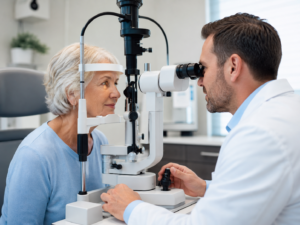
A slit lamp exam allows our doctors to carefully evaluate the natural lens of the eye for cataract changes.
A cataract evaluation may include visual acuity testing, refraction to check your glasses prescription, slit-lamp examination of the lens, retinal evaluation, and discussion of how your vision is affecting daily activities such as reading, computer work, driving, and night driving.
These findings help our doctors determine whether your symptoms may improve with updated glasses or whether cataracts are becoming significant enough to consider surgical consultation.
When Is Cataract Surgery Considered?
Cataract surgery is usually considered when cataracts interfere with daily activities and vision can no longer be improved adequately with glasses or contact lenses. If surgery is appropriate, we can help guide you through the referral process and coordinate care with a trusted cataract surgeon.
Many patients do not need surgery immediately when cataracts are first diagnosed. Regular monitoring allows us to follow changes over time and recommend the next step when the timing is right.
If you are noticing blurred vision, glare, halos, or increasing difficulty with night driving, schedule a cataract evaluation with Vision Source – Orland Park.