
Pediatric Eye Health Care

What Is Special about Children’s Vision?
Vision is more than seeing clearly. It includes the brain’s ability to receive, process, and respond to visual information. A child’s vision depends on clear eyesight and healthy eyes, as well as focusing, eye teaming, tracking, and visual-processing skills. We consider each of these areas during every pediatric eye examination, adapting our testing to the child’s age and development.
Schedule an appointment at Vision Source - Orland Park, and give your child the gift of clear vision.
Infants

Our pediatric eye examinations begin in infancy and continue through the school years. Even children who cannot yet read an eye chart can be evaluated using age-appropriate techniques that assess visual function, refractive error, eye alignment, and ocular health.
School Performance
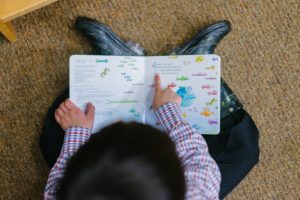 Many vision problems are easier to address when detected early. Because vision supports reading, classroom participation, and other learning activities, an undetected problem may affect a child’s comfort and performance at school. The visual system develops rapidly during childhood, making timely comprehensive eye examinations especially important.
If your child’s nearsightedness is increasing, ask us about our childhood myopia-management options.
Eye Examinations for Infants, Toddlers and School-Aged Children

The American Optometric Association recommends a comprehensive eye examination during the first year of life, at least once between ages 3 and 5, before first grade, and annually throughout the school years. Children with identified risk factors or eye and vision conditions may require more frequent examinations, as recommended by their eye doctor.
A comprehensive pediatric eye examination evaluates visual acuity, refractive error, eye health, eye alignment, focusing, tracking, and eye-teaming skills. School and pediatric vision screenings can be helpful, but they do not replace a comprehensive examination by an eye doctor.
Hand-Eye Coordination
 As part of a comprehensive eye examination, we also assess visual development and eye-hand coordination. Young children rely on vision to explore their surroundings and guide movement. When a vision problem interferes with visual perception or eye-hand coordination, early identification and appropriate care are important.
Support your child’s highest potential—call us at 708-460-2010 to schedule an annual comprehensive eye examination at Vision Source - Orland Park.