
Diabetic Eye Disease Evaluation in Orland Park
Retinal exams and imaging to monitor diabetes-related eye changes.
Diabetes can affect the small blood vessels in the retina, the light-sensitive tissue at the back of the eye. These changes are often referred to as diabetic retinopathy, but diabetes can also increase the risk of other eye health concerns.
At Vision Source – Orland Park, our doctors provide diabetic eye health evaluations to look for early retinal changes, monitor known diabetic eye disease, and help determine when additional care or referral may be needed.
What Is Diabetic Eye Disease?
Diabetic eye disease refers to eye health changes related to diabetes. The most common concern is diabetic retinopathy, which occurs when diabetes damages retinal blood vessels. These vessels may leak, swell, bleed, or develop abnormal growth over time.
Diabetic eye disease can develop in patients with type 1 or type 2 diabetes. Risk may increase with the length of time a person has had diabetes, changes in blood sugar control, high blood pressure, kidney disease, pregnancy, and other health factors.
Why Regular Eye Exams Matter
Diabetic eye disease may not cause noticeable symptoms in the early stages. A person can have retinal changes before vision feels blurry or distorted.
Regular dilated eye exams allow our doctors to examine the retina, document findings, and monitor for changes over time. Early detection is important because timely treatment and coordination with your medical care team can help reduce the risk of vision loss.
How We Evaluate Diabetic Eye Disease
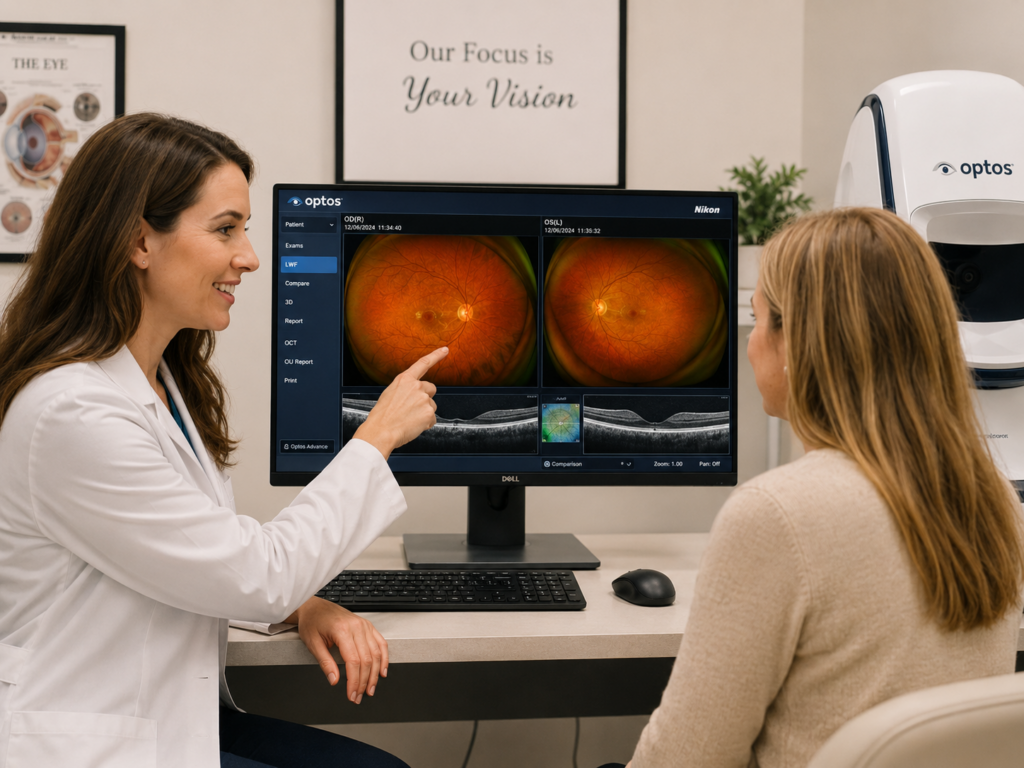
Retinal imaging helps our doctors document and monitor diabetes-related changes in the back of the eye.
A diabetic eye health evaluation may include visual acuity testing, refraction, dilated retinal examination, retinal imaging, and additional testing when appropriate. These tests help us look for bleeding, swelling, fluid, abnormal blood vessel changes, and other signs of diabetes-related retinal disease.
When needed, we may recommend closer monitoring or referral to a retinal specialist for additional evaluation or treatment.
Symptoms That Need Prompt Attention
Schedule an eye evaluation promptly if you notice new floaters, blurred or fluctuating vision, dark or missing areas in your vision, reduced color clarity, distortion, flashes of light, or sudden vision loss.
Even if your vision seems stable, routine diabetic eye exams remain important because early changes may occur before symptoms develop.
Coordinating Ongoing Care
Managing diabetes is a team effort. Good blood sugar control, blood pressure control, regular medical care, and routine eye exams all play an important role in protecting long-term vision.
Our goal is to identify diabetic eye changes early, monitor your retinal health carefully, and help guide the next steps in your care.
If you have diabetes or have not had a recent diabetic eye exam, schedule an eye health evaluation with Vision Source – Orland Park.
Medical Eye Exams for Diabetes
Diabetic eye exams are medical eye health evaluations because diabetes can affect the retina and other parts of the eye. These visits are generally billed to your medical insurance plan, subject to your plan’s benefits and coverage rules.
After your exam, we can send a medical report to your primary care physician, endocrinologist, or other treating medical doctor to help coordinate your diabetes care.